
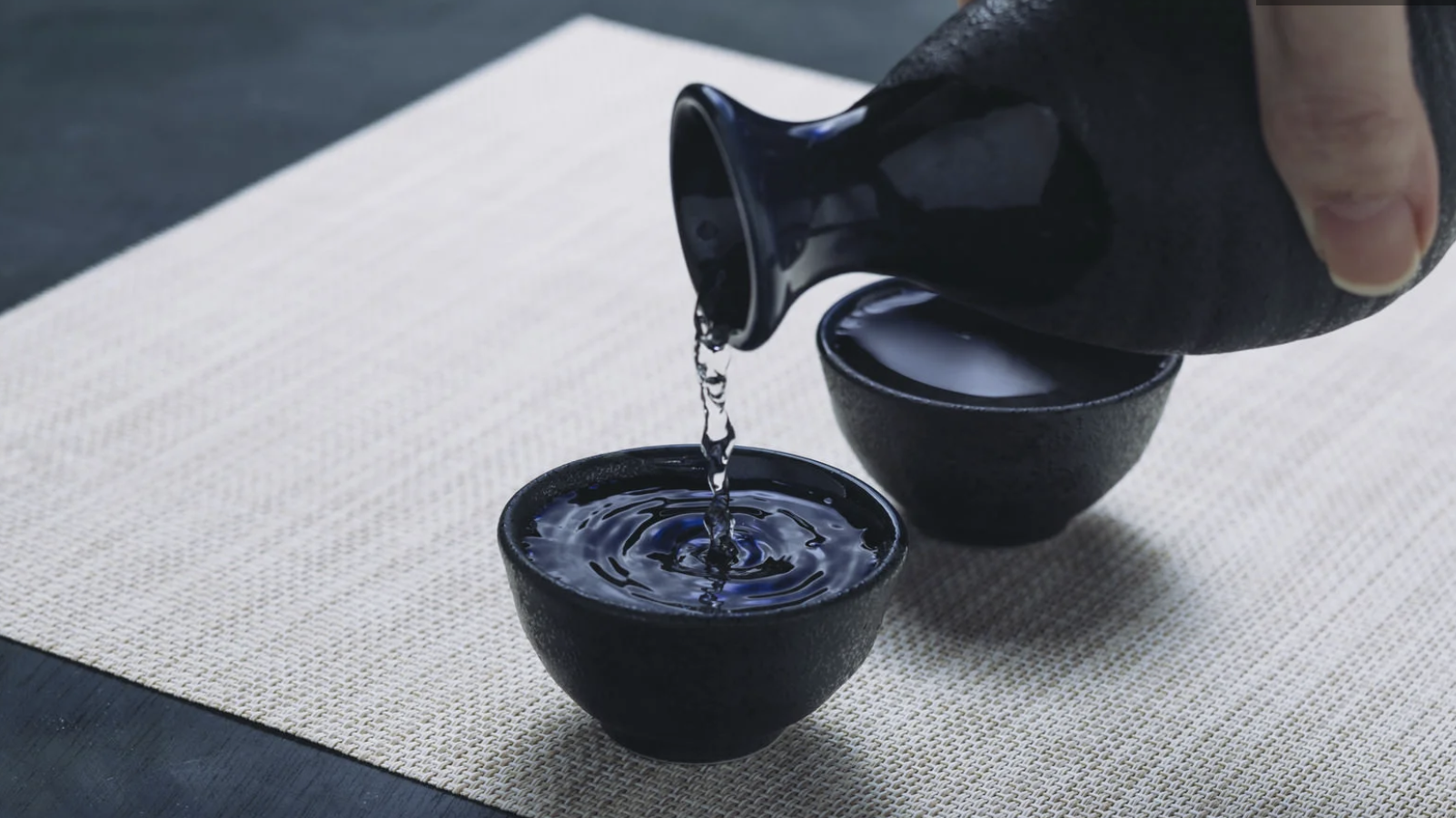
Do you enjoy drinking? I personally like having just a little before meals.
Japan has a unique drinking culture that’s rare in the world. It’s not just about drinking; you can enjoy it more deeply by savoring the underlying culture and customs—like the season, the vessels, and the etiquette.
Today I’ll introduce 4 ways to enjoy drinking that are uniquely Japanese.
Contents
Seasonal Ways to Savor the Flavor
🌸 Spring: Hanami Zake
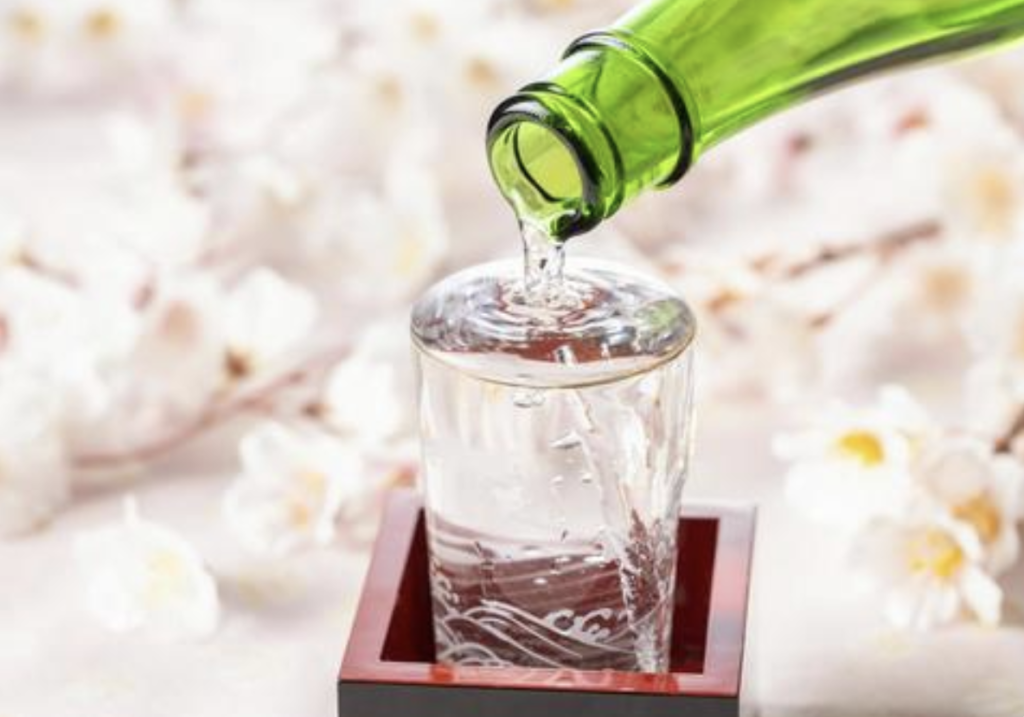
During cherry blossom season, enjoying sake under the trees is a classic tradition. Bringing bento boxes and snacks, people gather to drink sake or beer while celebrating spring’s arrival. If you’ve ever been in Japan during cherry blossom season, you might have witnessed this scene.
🍂 Autumn: Tsukimi Zake
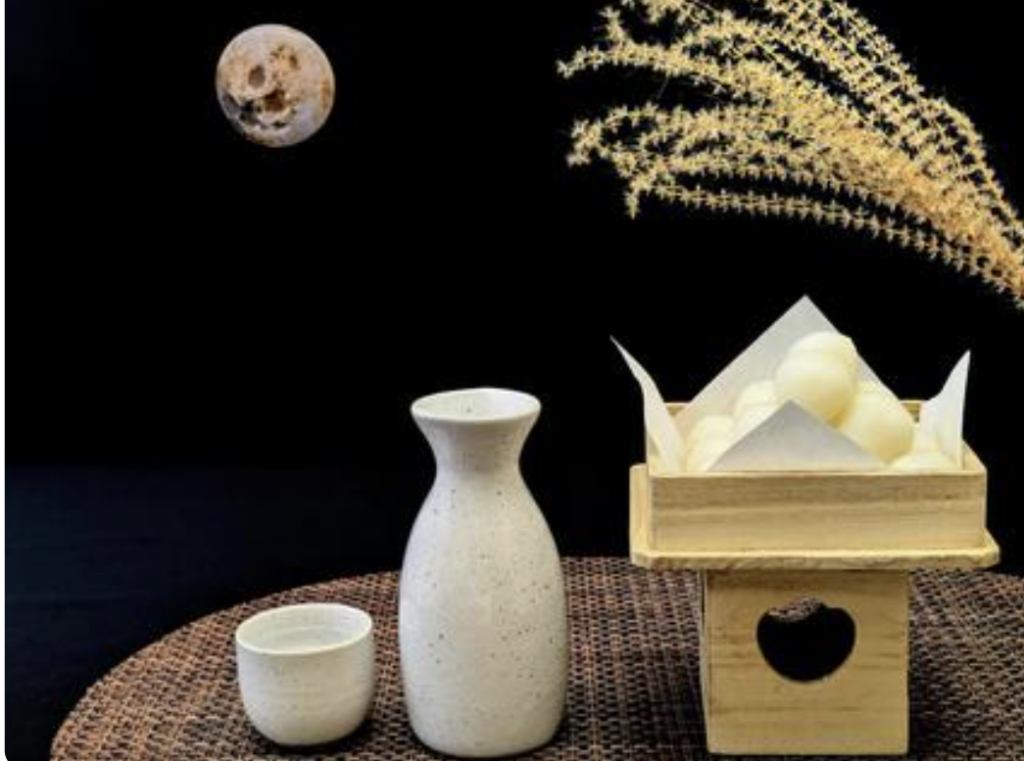
During the autumn festival known as the Mid-Autumn Moon, enjoying sake alongside moon-viewing Tukimi Dango is called “tsukimi-zake.” Sipping a cup while listening to the sounds of insects and feeling the autumn breeze is truly elegant.
- What are Tsukimi Dango?
Tsukimi Dango are rice dumplings offered to express gratitude for the rice harvest and to pray for a bountiful harvest the following year. Their round shape represents the full moon, and they also symbolize the wish for health and happiness by receiving the moon’s power.
❄️ Winter: Yukimi Zake
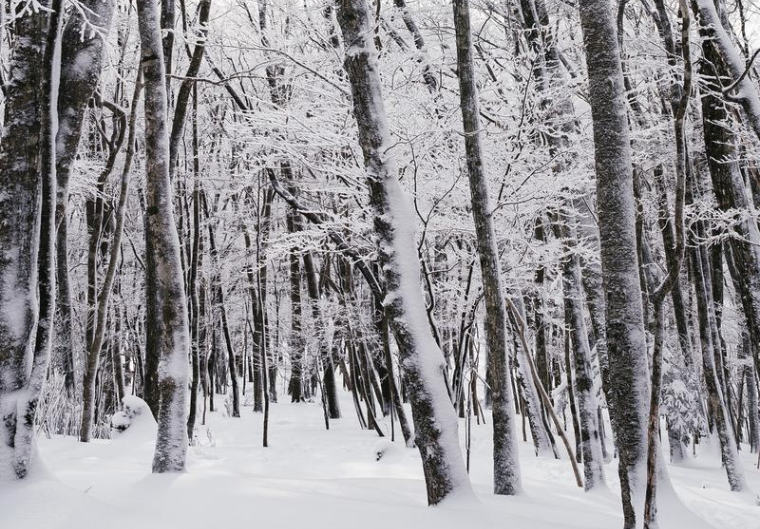
In the cold season, “snow-viewing sake” involves enjoying the snowy landscape. Sitting on tatami mats with a cup of hot sake in hand, watching the snow fall steadily is a quintessentially Japanese luxury. I’ve long wanted to try drinking hot sake while soaking in a Onsen!
It’s not traditional, but Japanese people often enjoy drinking alcohol while having BBQs and fireworks in the summer!
The Depth of Sake Enjoyed at Different Temperatures
Did you know sake reveals entirely different expressions depending on its temperature?
Chilled Sake (Reishu)
Refreshing and crisp. Perfect for hot days. Imagine it like a well-chilled white wine.
Room Temperature
The sake’s true flavor comes through directly.
Warm to Hot Sake (Nuru-kan to Atsu-kan)
Mellow and rich. A way to warm both body and soul on cold days.
Choosing the Right Vessel
The way you enjoy sake changes depending on the vessel you choose.
Masu cup
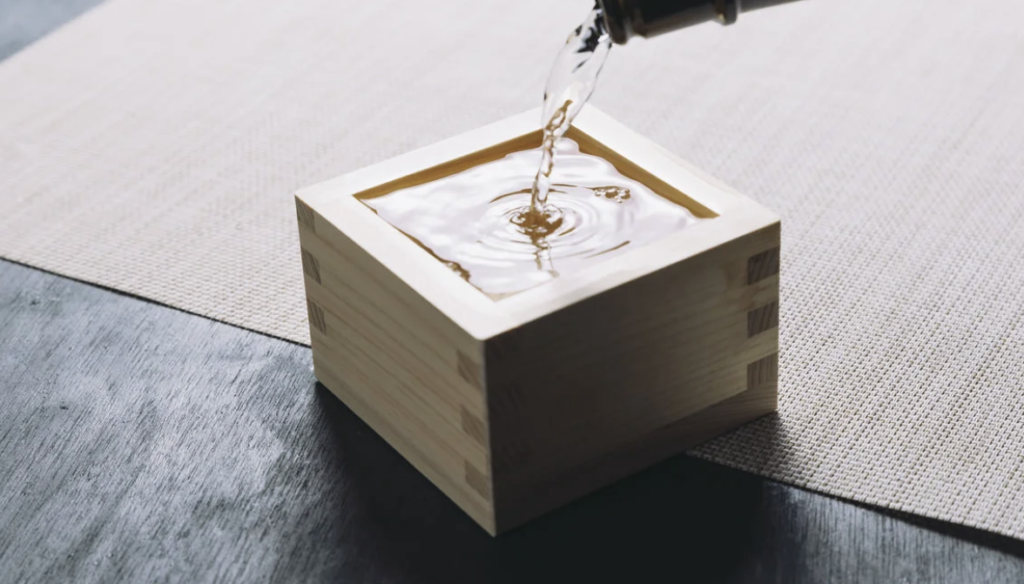
The wood’s aroma harmonizes with the sake, creating a special feeling. This is a traditional Japanese way of drinking sake that has been enjoyed for centuries.
Formal drinking method: Drink from the flat part of the masu
This method might be challenging, but drinking from the flat surface of the masu cup allows the sake to hit the tip of your tongue. Since the tip of the tongue detects sweetness, it enhances the perception of sweetness. The sake spreads across your entire tongue, allowing you to fully appreciate its rich aroma. Try this method if you want to savor the sake slowly.
Recommended Method: Drink from the corner of the masu cup
Drinking from the corner of the masu cup allows the sake to reach the back of your tongue. The back of the tongue has many taste buds sensitive to sourness and astringency, allowing you to better appreciate these flavors.
Since you drink with your mouth slightly closed, this method also pairs well with sake that has a weaker aroma and helps bring out its umami.
Tokkuri and Ochoko Set
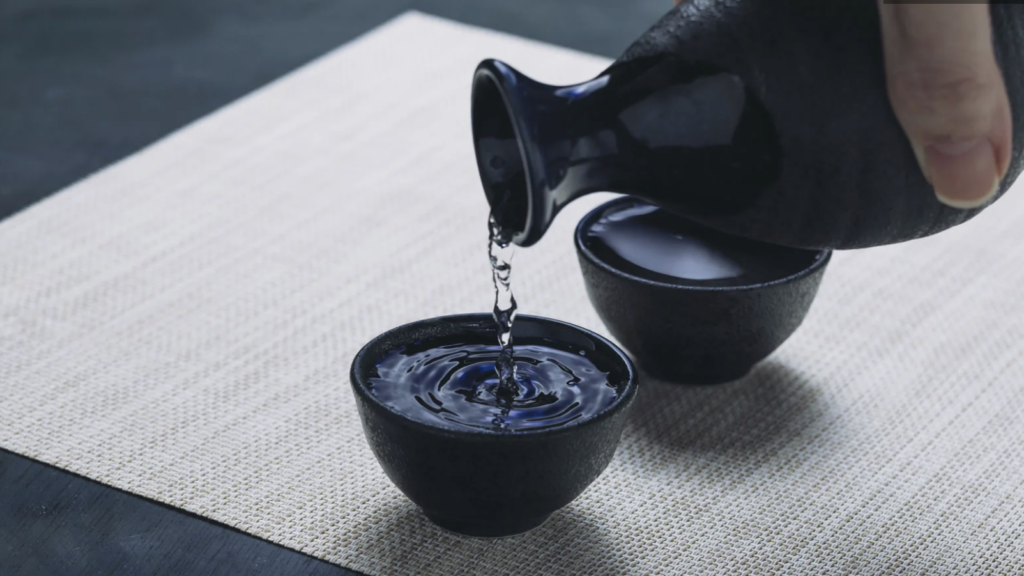
Ochoko is the small cup as above. Drinking small sips allows you to savor the flavor and aroma thoroughly.
Tokkuri is a container with a narrow neck and a bulbous base. (By the way the place where my husband and I first met was an izakaya called “Tokkuri”…!)
We can enjoy the communication of pouring and being poured. Tokkuri and ochoko are readily available in Japan, so please give them a try.
The Culture of Pouring Sake as a Communication
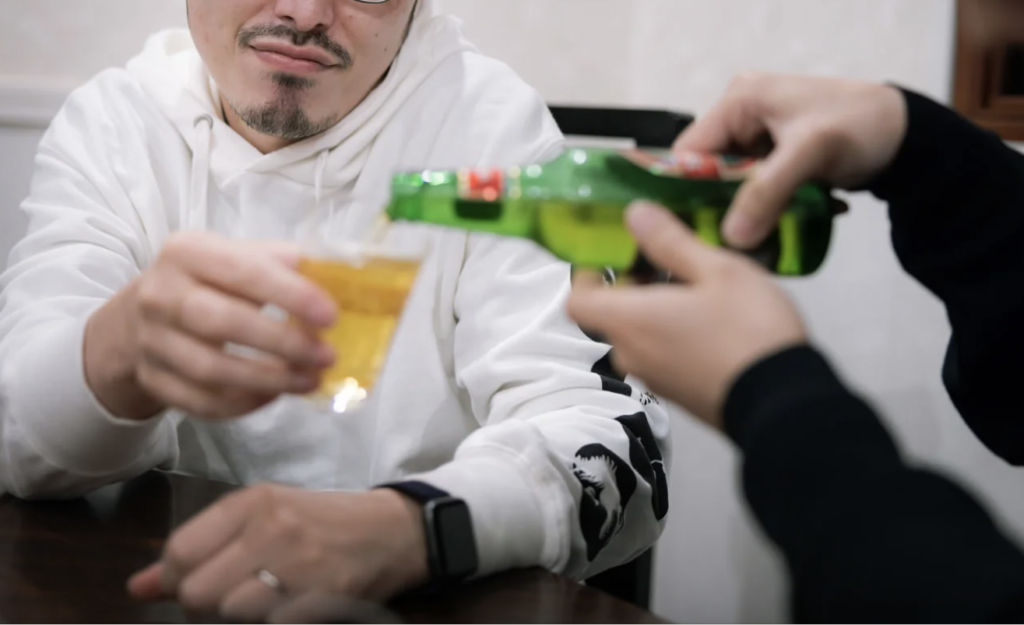
Have you ever seen Japanese people pouring sake for each other?
The culture of “oshaku” (pouring drinks for others), seen at Japanese-style parties Nomi-kai (or En-kai), is a uniquely Japanese custom. Pouring for someone senior shows respect, and the act of pouring for each other helps create a relaxed atmosphere. It can also be important in business settings.
For example, if you pour drinks for Japanese you’ve met at an izakaya, it shows you respect them and their culture, and might even help the conversation flow!
At the government agency where I used to work, this traditional etiquette was held in very high regard. So during year-end parties (Bonen-kai) and New Year’s parties (Shinnen-kai), we would sit seiza-style on the tatami mats and pour beer for our superiors. It’s a memory from long ago…
Final Note
Japan’s drinking culture extends far beyond simply “drinking.”
It connects with every element—the seasons, vessels, relationships with people, regional characteristics, and more.
Even incorporating just a little into your daily life can enrich your time.
I hope you to enjoy sake in a uniquely Japanese style!!